
Key Facts
- Both adenomyosis and endometriosis involve tissue similar to the uterine lining growing where it does not belong, but the location is different
- In adenomyosis, that tissue grows into the muscular wall of the uterus; in endometriosis, it grows outside the uterus entirely
- The two conditions share many symptoms, including painful periods, pelvic pain, pain during sex, and heavy bleeding, which is why they are so frequently confused
- Both conditions are estrogen-driven and can worsen over time without treatment
- They commonly occur together: research shows endometriosis coexists in an estimated 6 to 22 percent of patients diagnosed with adenomyosis
- The average diagnostic delay for endometriosis alone is more than six years worldwide; adenomyosis is diagnosed even later for many women
- Neither condition requires hysterectomy as a first or only option; a range of minimally invasive treatments is available
If you have been living with painful, heavy periods and pelvic pain that disrupts your daily life, you have likely spent time searching for answers. Many women are eventually told they may have endometriosis, adenomyosis, or both. These two conditions are closely related, frequently confused, and often misdiagnosed for years.
Understanding the difference between them matters deeply, because the two conditions behave differently, respond to different aspects of treatment, and require different diagnostic approaches. Getting clarity on which condition or combination of conditions is driving your symptoms is the foundation of finding effective relief.
This guide explains what adenomyosis and endometriosis are, how their symptoms compare, how they are diagnosed, and what your treatment options look like when you work with a gynecologist who specializes in minimally invasive care.
What Is Adenomyosis?
Adenomyosis is a condition in which the endometrial tissue, the tissue that normally lines the inside of the uterus, grows into and through the muscular wall of the uterus itself, a layer called the myometrium.
Each month, this misplaced tissue responds to the hormonal signals of the menstrual cycle just as the uterine lining does. It thickens, swells, and attempts to shed during menstruation. But because it is embedded within muscle rather than the uterine cavity, it has no way to exit the body. The result is internal bleeding within the uterine wall, inflammation, scarring, and a progressively thickened, enlarged, and tender uterus.
Adenomyosis is often described as the “sister disease” of endometriosis. While the two conditions are related in their mechanisms, they are distinct in where the displaced tissue is located and how that location drives specific symptoms.
Who is most commonly affected by adenomyosis?
Adenomyosis has traditionally been associated with women in their 40s who have had children, but research increasingly shows it can affect younger women and those who have not yet had children. It is estimated to be present in 20 to 35 percent of women of reproductive age, though many cases go unrecognized. Because it requires imaging or surgical evaluation to confirm, and because its symptoms overlap so heavily with other conditions, it is significantly underdiagnosed.
What Is Endometriosis?
Endometriosis is a condition in which tissue similar to the endometrium grows outside the uterus. These implants most commonly develop on the ovaries, fallopian tubes, the outer surface of the uterus, the tissue lining the pelvis, and sometimes the bowel, bladder, rectum, and other structures throughout the abdominal and pelvic cavity.
Like the uterine lining, these implants respond to hormonal changes each month, swelling and bleeding with the menstrual cycle. Because the blood has nowhere to go, it causes inflammation, the formation of scar tissue (adhesions), and damage to the structures it affects. Over time, this process can distort pelvic anatomy, bind organs together, and impair fertility.
Who is most commonly affected by endometriosis?
Endometriosis affects an estimated 10 to 15 percent of women of reproductive age and tends to begin in the teenage years or early 20s. It is a progressive condition, meaning that without appropriate treatment, it tends to worsen over time. Despite its prevalence and the severity of its impact on quality of life, the average diagnostic delay worldwide is more than six years, largely because symptoms are too often normalized or dismissed as “just bad periods.”
What is the Core Difference Between Adenomyosis and Endometriosis?
The clearest way to distinguish these two conditions is by location.
- Adenomyosis: The displaced tissue is inside the muscular wall of the uterus. The uterus is the affected organ, and it typically becomes enlarged, boggy, and tender as a result.
- Endometriosis: The displaced tissue is outside the uterus. It spreads to other structures throughout the pelvis and, in more advanced cases, beyond the pelvis.
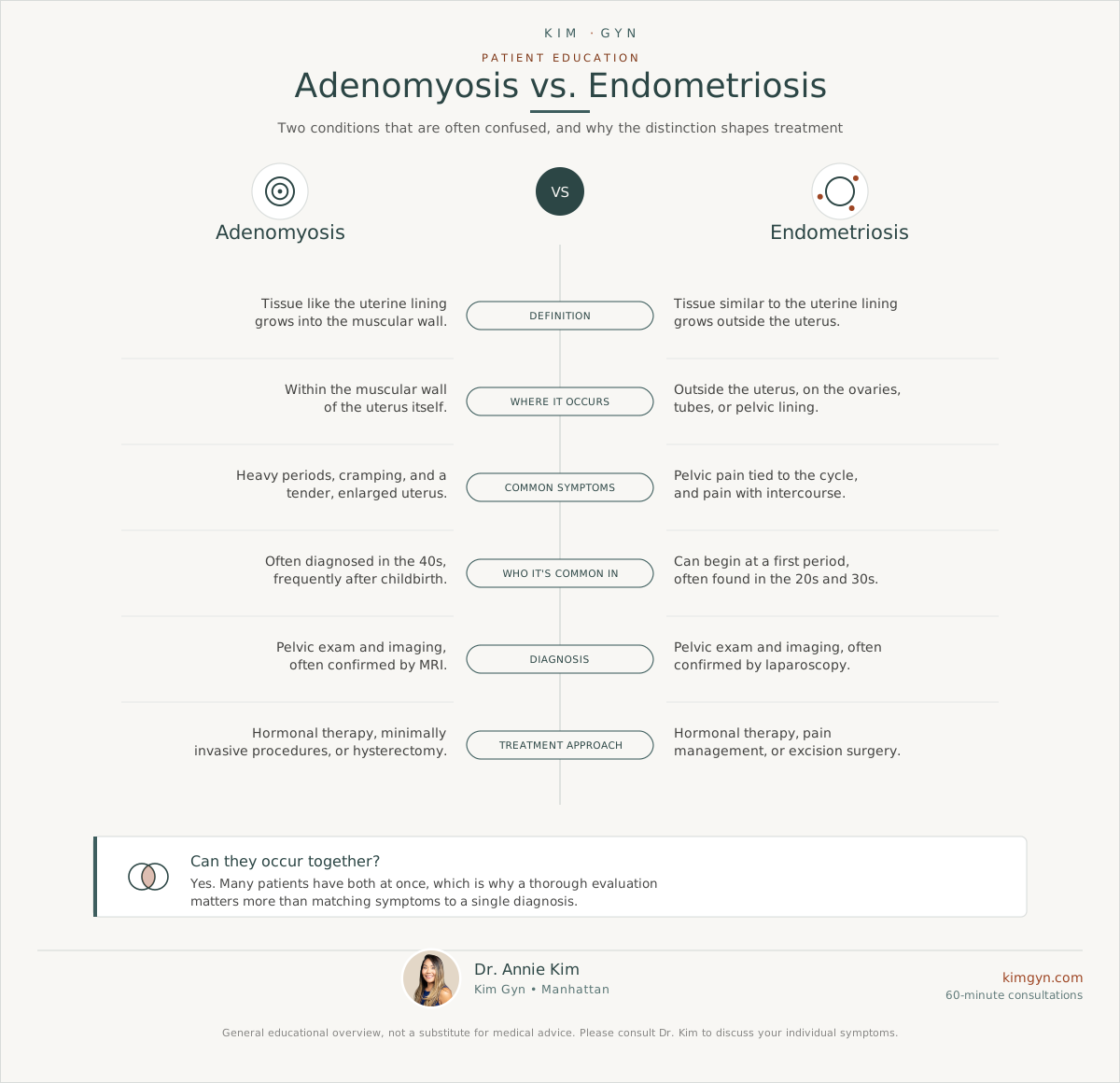
This distinction matters for diagnosis, because the two conditions are identified through different methods. It also matters for treatment, because the approaches that most effectively address one may not be sufficient for the other, particularly when both conditions are present at the same time.
Adenomyosis Symptoms: What to Look For
Adenomyosis symptoms tend to be closely tied to menstruation. Because the disease is housed within the uterine muscle, the uterus itself drives much of the symptom picture.
The hallmark adenomyosis symptoms include:
- Heavy menstrual bleeding (menorrhagia). This is one of the most defining features of adenomyosis. The enlarged, thickened uterine wall does not contract efficiently during menstruation, which allows blood to pool rather than being expelled normally. Flooding, the passage of large clots, and bleeding that soaks through protection within an hour are common experiences.
- Severely painful menstrual cramps (dysmenorrhea). Cramps that are progressively worsening with each cycle, begin days before menstruation, and persist throughout the period are a characteristic pattern.
- Chronic pelvic pressure or heaviness. An enlarged uterus creates a sense of fullness, bloating, and pressure in the lower abdomen that many women describe as feeling perpetually like they are about to start their period.
- Pelvic pain between periods. While pain is most pronounced around menstruation, some women with adenomyosis experience low-grade pelvic aching throughout the month.
- Pain during sexual intercourse (dyspareunia). Deep pressure during sex can be particularly uncomfortable when the uterus is enlarged and tender.
- Enlarged or tender uterus. A gynecologist may detect this on physical examination.
- Fatigue and anemia. Chronic heavy bleeding often leads to iron-deficiency anemia, resulting in persistent fatigue, lightheadedness, and difficulty concentrating.
What distinguishes adenomyosis symptoms most clearly is the consistent, significant impact on menstrual bleeding volume. A woman who has always had painful periods that are also very heavy is more likely to have adenomyosis as a contributing factor than someone whose primary complaint is pelvic pain without substantial bleeding changes.
Endometriosis Symptoms: What to Look For
Endometriosis symptoms are shaped by where the implants are located throughout the pelvis. Because endometriosis can affect the bowel, bladder, ovaries, and surrounding nerves, the symptom picture can be more varied and sometimes more puzzling than adenomyosis.
The hallmark endometriosis symptoms include:
- Severe menstrual cramps (dysmenorrhea). Pain that begins before menstruation, peaks during bleeding, and often does not respond adequately to over-the-counter pain medications is a common presentation. In many women, this pain progressively worsens over the years.
- Chronic pelvic pain. Unlike adenomyosis, endometriosis-related pelvic pain frequently extends beyond the menstrual window and may be present throughout the month.
- Pain during or after sexual intercourse. When endometriosis implants are located behind the vagina or in the posterior pelvic space, deep penetration can be particularly painful. This symptom is sometimes the first that prompts women to seek care.
- Pain with bowel movements or urination. When endometriosis affects the bowel or bladder, women may experience pain, urgency, or changes in function that worsen around menstruation. This is frequently confused with irritable bowel syndrome or a urinary condition.
- Abnormal bleeding. Some women with endometriosis experience heavy periods, spotting between periods, or irregular cycles, though bleeding changes tend to be less uniformly pronounced than in adenomyosis.
- Bloating and gastrointestinal symptoms. Cyclical bloating around menstruation, often referred to as “endo belly,” is a widely reported experience.
- Fatigue. Chronic inflammation and the physical toll of ongoing pain contribute to persistent fatigue that affects concentration and daily functioning.
- Difficulty conceiving. Endometriosis is one of the leading causes of infertility in women. It can distort pelvic anatomy, damage the fallopian tubes and ovaries, affect egg quality, and create an inflammatory environment that interferes with implantation.
- Endometrioma. A specific type of ovarian cyst called an endometrioma (sometimes called a “chocolate cyst”) forms when endometriosis grows on or within the ovary. Endometriomas are detectable on ultrasound and, when present, serve as a strong diagnostic indicator of endometriosis.
What distinguishes endometriosis symptoms most clearly is the breadth and unpredictability of the symptom picture and the fact that pain is often significant outside of menstruation. The involvement of the bowel, bladder, and adjacent structures can make the condition feel more systemic than a purely uterine problem.
Side-by-Side Symptom Comparison
| Symptom | Adenomyosis | Endometriosis |
|---|---|---|
| Severe menstrual cramps | Very common, worsens progressively | Very common, worsens progressively |
| Heavy menstrual bleeding | A defining feature | Can occur, but less consistently pronounced |
| Chronic pelvic pain between periods | Moderate | Often significant |
| Pain during intercourse | Common (deep pressure on enlarged uterus) | Common (especially with posterior implants) |
| Pain with bowel or bladder symptoms | Less common | More common when bowel/bladder is involved |
| Pelvic bloating or pressure | Common (enlarged uterus) | Common (“endo belly”) |
| Enlarged uterus | Characteristic finding | Not typical |
| Ovarian cysts (endometrioma) | Not associated | Associated with advanced disease |
| Fertility impact | Significant | Significant |
| Anemia from heavy bleeding | Common | Less consistently a feature |
Can You Have Both Endometriosis and Adenomyosis at the Same Time?
Yes, and this is more common than many women are told.
Research shows that endometriosis coexists in 6 to 22 percent of patients with diagnosed adenomyosis, and some studies in surgical populations have found co-occurrence rates substantially higher than that. The two conditions share overlapping hormonal and inflammatory pathways, which may explain why they frequently develop together.
When both conditions are present simultaneously, the symptom burden tends to be greater, and the diagnostic picture is more complex. A woman who receives treatment for endometriosis alone, without recognizing that adenomyosis is also present, may find that her pain and bleeding improve only partially after surgery. The persistent symptoms are a signal that the adenomyosis was not addressed.
This is one of the most important reasons to seek care from a specialist who is experienced with both conditions, uses thorough diagnostic imaging, and considers the full clinical picture before developing a treatment plan.
How Each Condition Is Diagnosed
Diagnosing Adenomyosis
Adenomyosis is primarily diagnosed through imaging.
- Transvaginal ultrasound (TVUS) is typically the first-line imaging tool. A skilled sonographer or gynecologist can often identify characteristic signs of adenomyosis, including a thickened or asymmetric uterine wall, heterogeneous texture of the myometrium, and poorly defined lesions within the muscle. The accuracy of ultrasound for adenomyosis is highly dependent on the experience of the person performing and interpreting the study.
- MRI (magnetic resonance imaging) provides more detailed visualization of the uterine architecture and is considered the most accurate non-surgical method for diagnosing adenomyosis, particularly when the disease is diffuse or when it needs to be distinguished from fibroids.
A definitive histological diagnosis of adenomyosis technically requires tissue examination (either from a uterine biopsy or, in definitive cases, from a hysterectomy specimen). However, in clinical practice, a combination of imaging findings and symptom history is typically sufficient to guide treatment decisions without requiring surgery for diagnosis alone.
Diagnosing Endometriosis
Endometriosis is more challenging to diagnose without surgery.
- Pelvic ultrasound can identify endometriomas on the ovaries and, in the hands of a specialist, may reveal signs of deep infiltrating endometriosis involving the bowel or bladder. However, standard ultrasound cannot detect superficial endometrial implants on the pelvic peritoneum.
- MRI is valuable for mapping the extent of deep infiltrating endometriosis, particularly when surgical planning is needed.
- Diagnostic laparoscopy remains the gold standard for confirming endometriosis. This minimally invasive surgical procedure allows a gynecologist to directly visualize the pelvic cavity, identify implants, and obtain biopsy samples for pathological confirmation. It can also be combined with surgical treatment at the same time.
Importantly, imaging that appears normal does not rule out endometriosis. Many women with significant endometriosis have completely normal pelvic ultrasounds because the implants are too small or superficial to be visible on standard imaging. When symptoms are strongly suggestive, the clinical judgment of an experienced specialist matters more than the result of any single test.
Treatment Options: A Minimally Invasive Approach
Both adenomyosis and endometriosis are treatable. The goal of modern, patient-centered gynecologic care is to meaningfully reduce symptoms, preserve fertility where desired, and avoid unnecessary major surgery.
Shared First-Line Treatments
Several approaches are used to manage both conditions:
- NSAIDs (nonsteroidal anti-inflammatory drugs) such as ibuprofen or naproxen are commonly used to manage menstrual pain for both conditions. They do not treat the underlying disease but can reduce the inflammation and prostaglandin activity that drives cramping.
- Hormonal birth control (oral contraceptives, the patch, the ring) can suppress the hormonal fluctuations that drive both conditions, reducing bleeding volume and pain in many women.
- Progesterone or progestin therapy (including pills and injections) suppresses estrogen-driven tissue activity and can meaningfully reduce symptoms of both adenomyosis and endometriosis.
- The levonorgestrel-releasing IUD (Mirena) is one of the most effective hormonal options for both conditions. By delivering progestin locally to the uterine cavity, it dramatically reduces bleeding and pain in many women with adenomyosis or endometriosis.
- GnRH agonists and antagonists create a temporary, reversible state of low estrogen (sometimes called a medical menopause) to suppress both conditions. These are often used for defined periods, with add-back hormonal therapy to manage side effects.
Surgical Treatment for Endometriosis
- Laparoscopic excision surgery is the gold standard surgical treatment for endometriosis. Unlike ablation (burning), which destroys only the surface of implants, excision removes the entire implant from its root. This reduces the likelihood of recurrence and is associated with better long-term pain outcomes. Excision surgery requires an experienced minimally invasive gynecologic surgeon.
- Laparoscopic ablation can remove superficial implants and is appropriate in some clinical scenarios, though it is generally considered less definitive than excision for deeper disease.
- Hysterectomy is not a cure for endometriosis. Because endometriosis exists outside the uterus and can persist in other pelvic structures, removing the uterus does not guarantee elimination of the disease.
Surgical Treatment for Adenomyosis
- Adenomyomectomy is a uterus-sparing surgical procedure in which adenomyotic tissue is excised from the uterine muscle while leaving the uterus intact. It is most effective when adenomyosis is focal rather than diffuse throughout the uterine wall. It is an important option for women who wish to preserve their fertility.
- Uterine artery embolization (UAE) is a non-surgical, image-guided procedure that reduces blood supply to the uterus and can significantly reduce bleeding and bulk-related pressure symptoms from adenomyosis. Its role in fertility-seeking women requires individual evaluation.
- Endometrial ablation destroys the uterine lining and is appropriate only for women who have completed childbearing. It is not effective for deep adenomyosis.
- Hysterectomy (removal of the uterus) is the only definitive cure for adenomyosis because the disease is housed within the uterine muscle. However, it is by no means the only option, and many women achieve meaningful relief through hormonal management or uterus-preserving surgery, particularly when adenomyosis is focal or when fertility is a priority.
When Both Conditions Are Present
When adenomyosis and endometriosis coexist, a combined surgical approach is often possible, in which excision of endometriosis and adenomyomectomy (or other adenomyosis-targeted intervention) are performed during the same minimally invasive procedure. This is an important reason to work with a gynecologist who is skilled in managing both conditions and conducts a thorough preoperative evaluation.
Taking the Next Step
Living with adenomyosis, endometriosis, or both does not have to be your normal. Both conditions are diagnosable and treatable without defaulting to major surgery as a first option.
At Kim Gyn, Dr. Kim specializes in the evaluation and minimally invasive treatment of adenomyosis and endometriosis, offering Upper East Side patients the kind of thorough, individualized care that so many women have been searching for. From advanced diagnostic imaging to excision surgery, adenomyomectomy, and hormonal management, the goal is always to find the most effective approach with the least disruption to your body and your life.
Schedule a consultation to discuss your symptoms and find the answers you deserve.